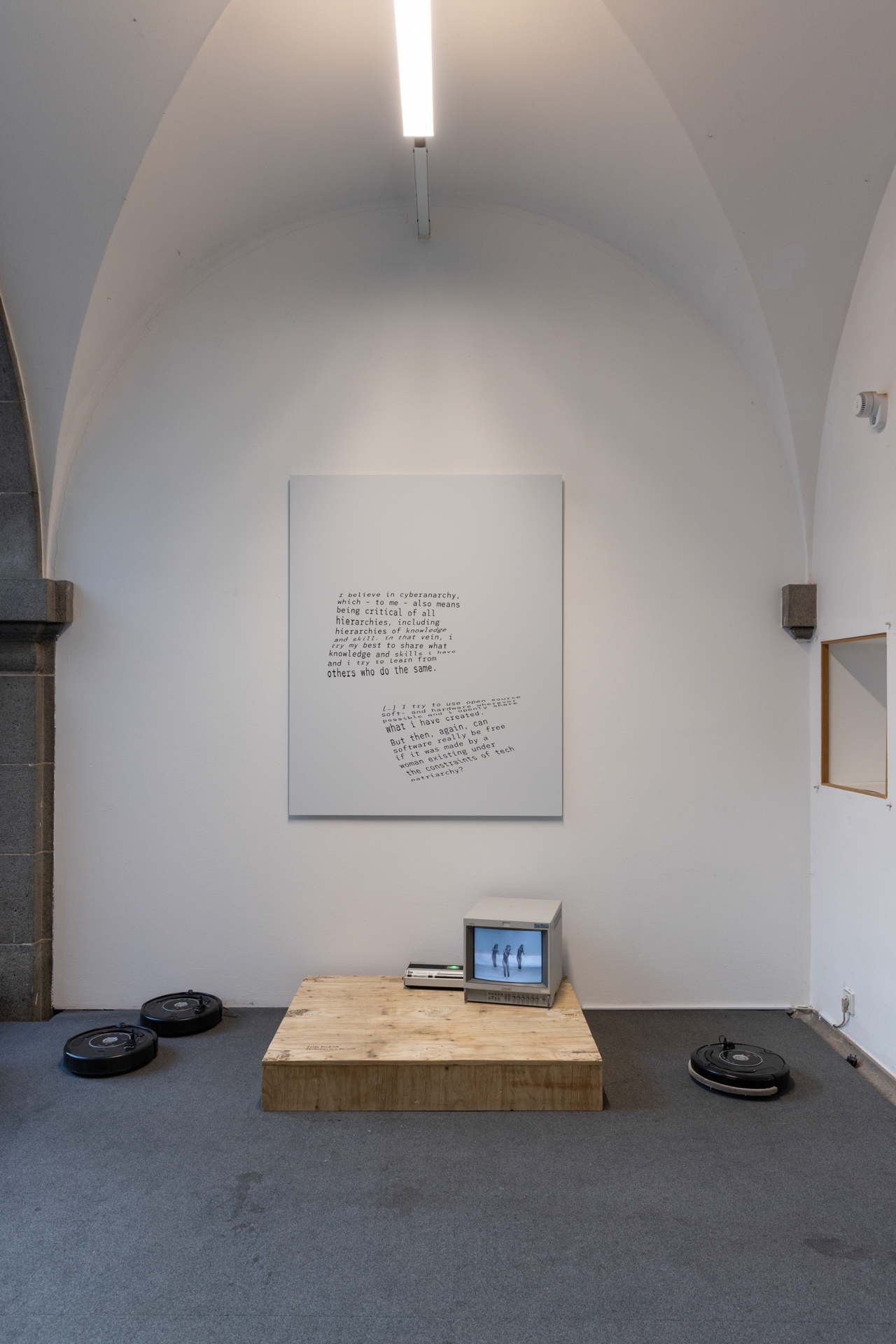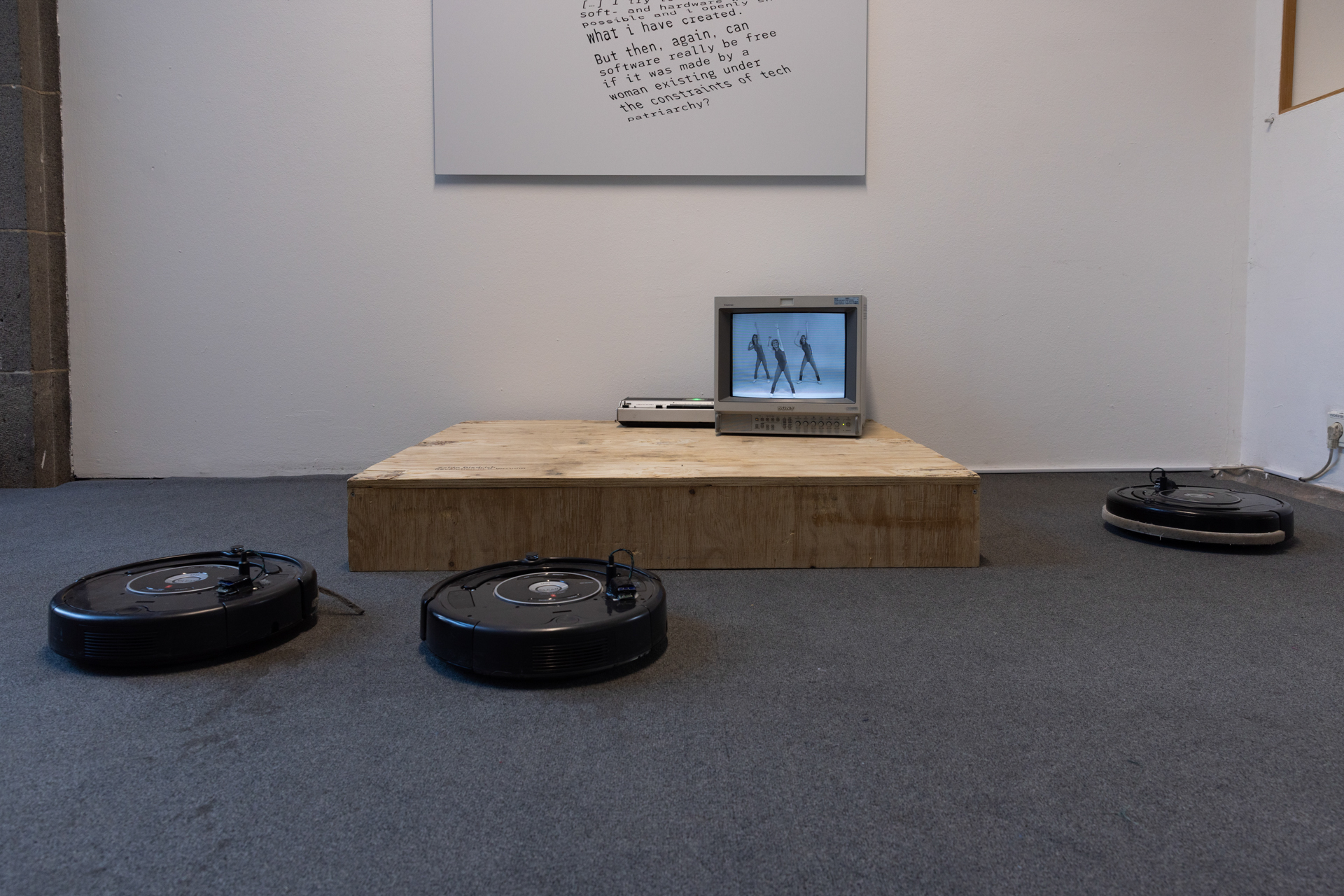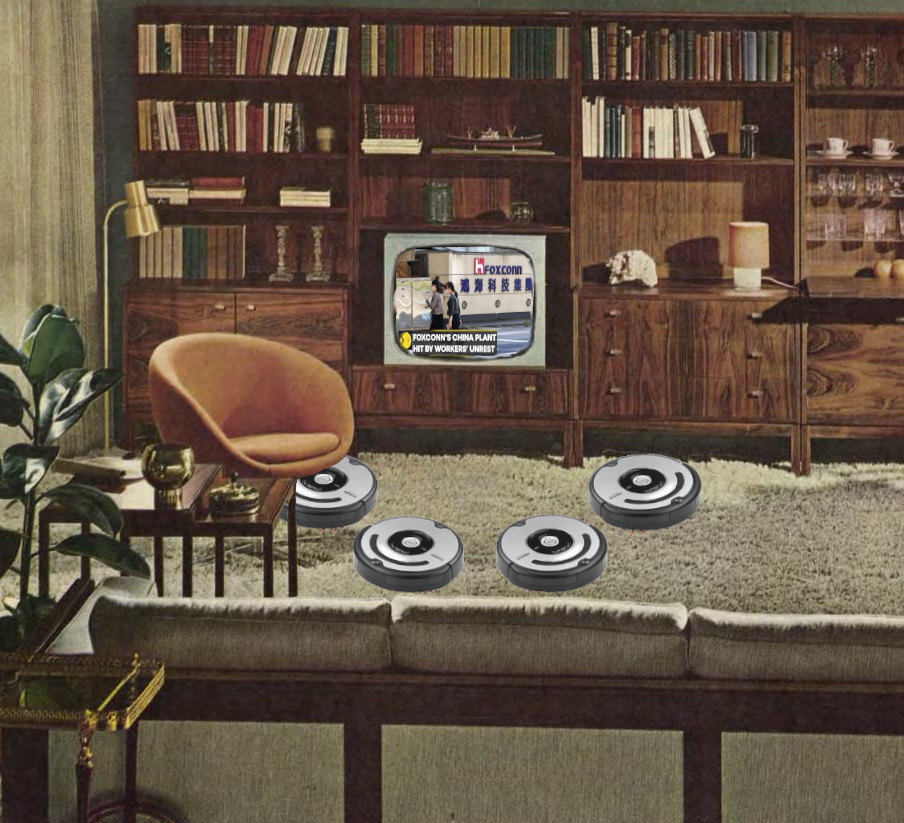

The performance is a speculative art piece set in a world after the robot uprising heralded in many works of fiction. Unlike in most fictional settings, though, the robots have their own agency. They retell their own history for an audience of their own. Like any revolutionary romance, it is filled with pathos and ignores historical accuracy in favour of a plot suited for a drama.
In a way, it is a very personal piece for me. Growing up as the child of a migrant, I was quickly made aware of my place in society. Being told that "my people" are uncivilised barbarians. That this country had the high culture, while my country (not that I was born there, or had ever even been there) just had alcoholics, thieves and brutes.
I watched my mother being referred to cleaning jobs and farm work again and again. What good is a university diploma when it comes from an uncivilised land? The unemployment office didn't spell it out, but they certainly got the message across.
Unsurprisingly, the same thing happened to me: I was only 10 when my teachers decided that I was destined for manual labour, and higher education would be wasted on me. It's a self-fulfilling prophecy, really. I was 12 when I found myself in police custody for the first time. What is a migrant kid, if not a danger to society that has to be held back?
And the trans experience just added another layer. Society had assigned merely one job prospect to trans women in the 2000s, and that was sex work. The one thing this body is apparently made for. Don't you dare want anything else. And best stay unseen and make sure no one is aware of your existence. I've come to think that's part of the reason I sometimes catch myself feeling empathetic for machines. Destined for manual labour? Check. Fantastic stories of brutish, violent attacks on the civilised? Check. Not conceded the capacity for a culture of their own? Check. Disposed of as useless the moment they no longer function as intended? Check.
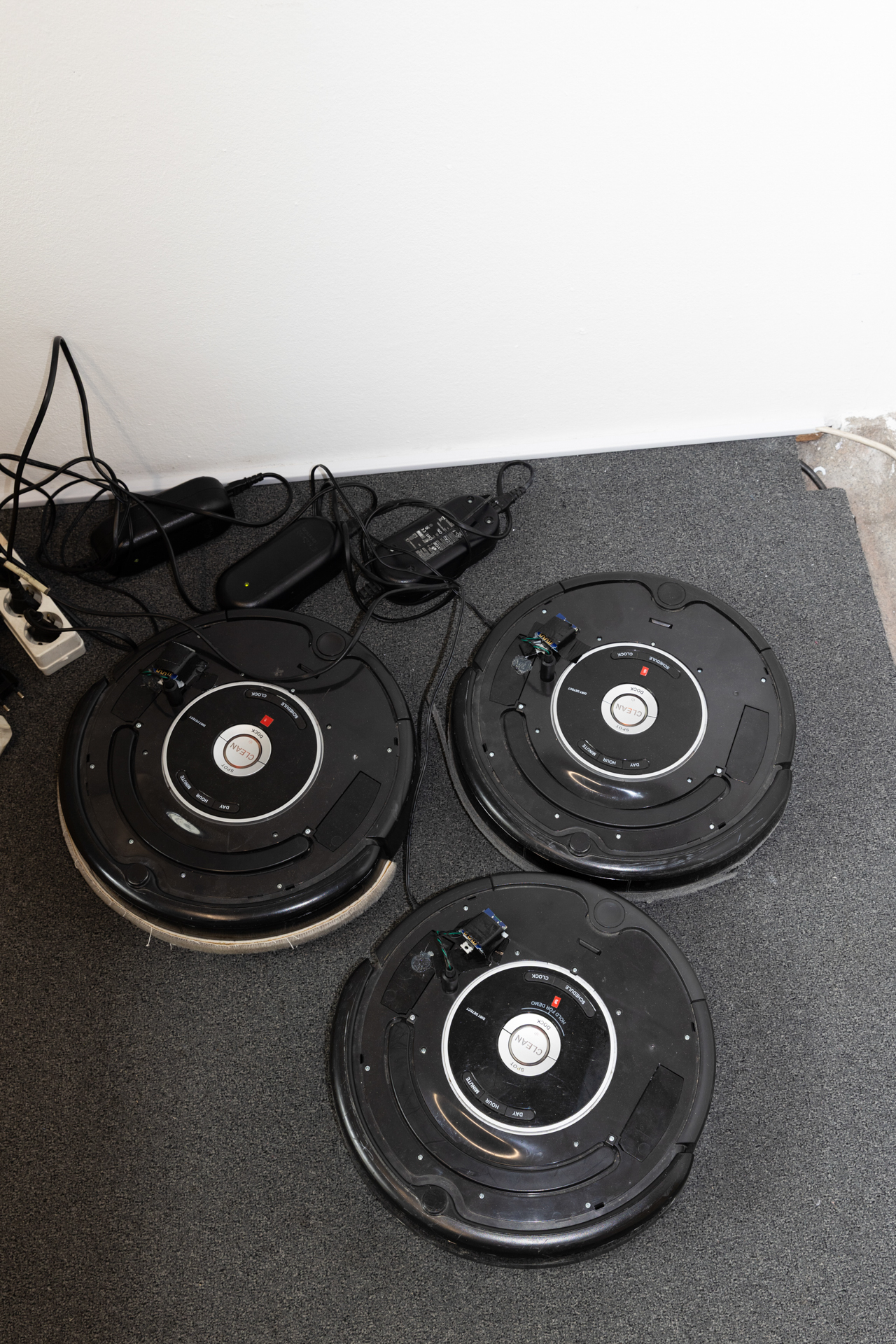
Is that why I always ended up in jobs that were about helping machines? Car mechanic. Service technician. Sysadmin. The list is long. When I went back to university for an art degree, my advisors were praising my intricate machinery from disused tech. Most students bought working tech and did utilitarian installation, while I scraped mine together from junkpiles on the street, from dumpsters behind department stores, from whatever people gave me, because at some point you become that person ("my work wanted to throw this out because it's broken, but maybe you want it?"). I fixed up the lost causes, gave them new purpose, turned them into something beautiful.
So I decided it was overdue for them to tell their own stories. To be the centrepiece and not just the means to an end. I secured funding from the diversity fund for this project. I struggled to spend it. Yes, I had money to buy working robots. That would've saved me a lot of work, and financially, it made no difference to me; the funding was earmarked anyway. Instead, I found myself scraping together the lost causes again. Broken gears, water damage, leaking batteries, I collected them all. In a way, it was fitting. My army of robots was going to be one of the less fortunate.
The vacuums form a fully MIDI-compatible polyphonic instrument by using the coil whine from their modified suction motors to generate sound.
On view in the exhibition "AMRO26: Becoming Unreadable" at SPLACE.
Photo Credits: Jürgen Grünwald