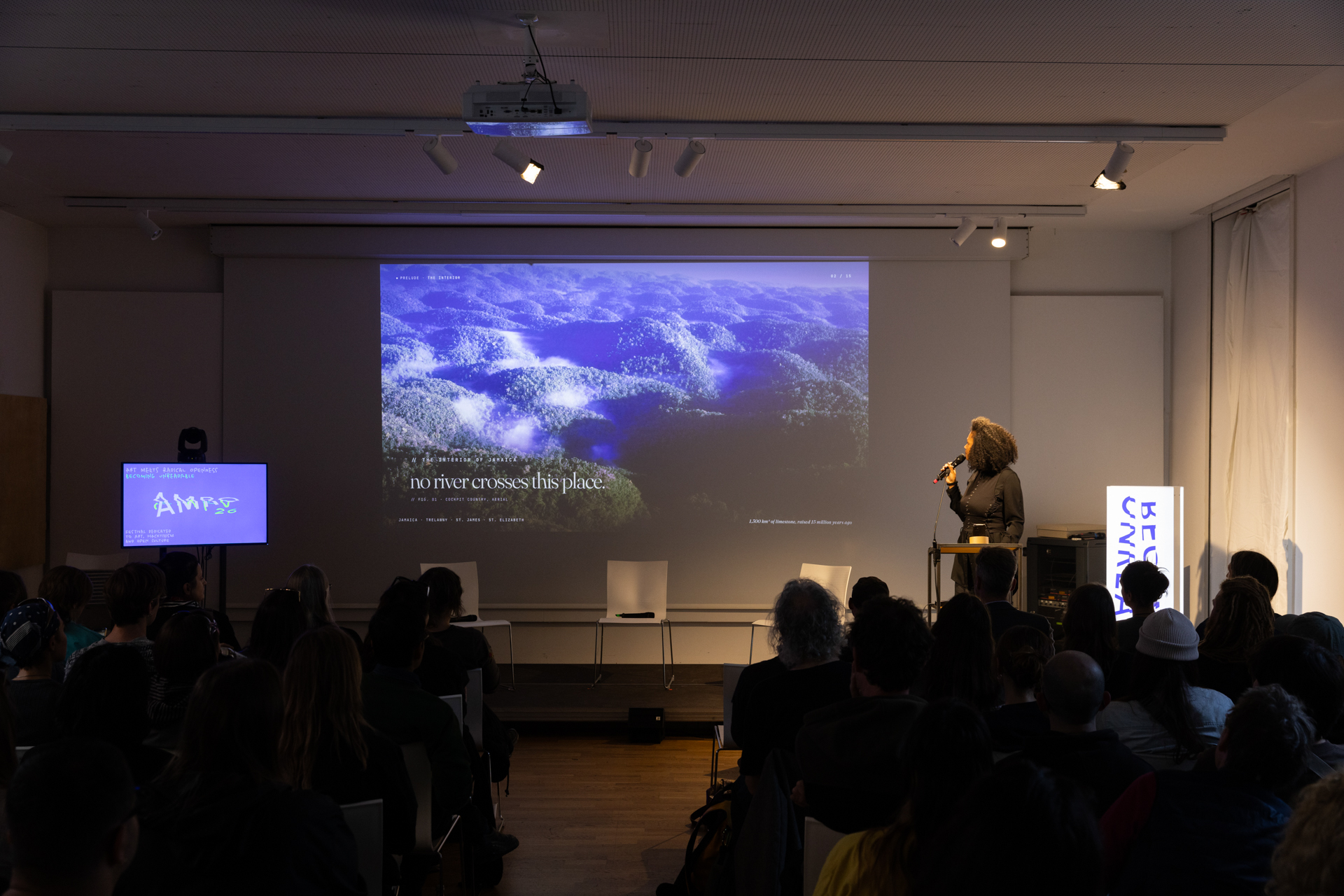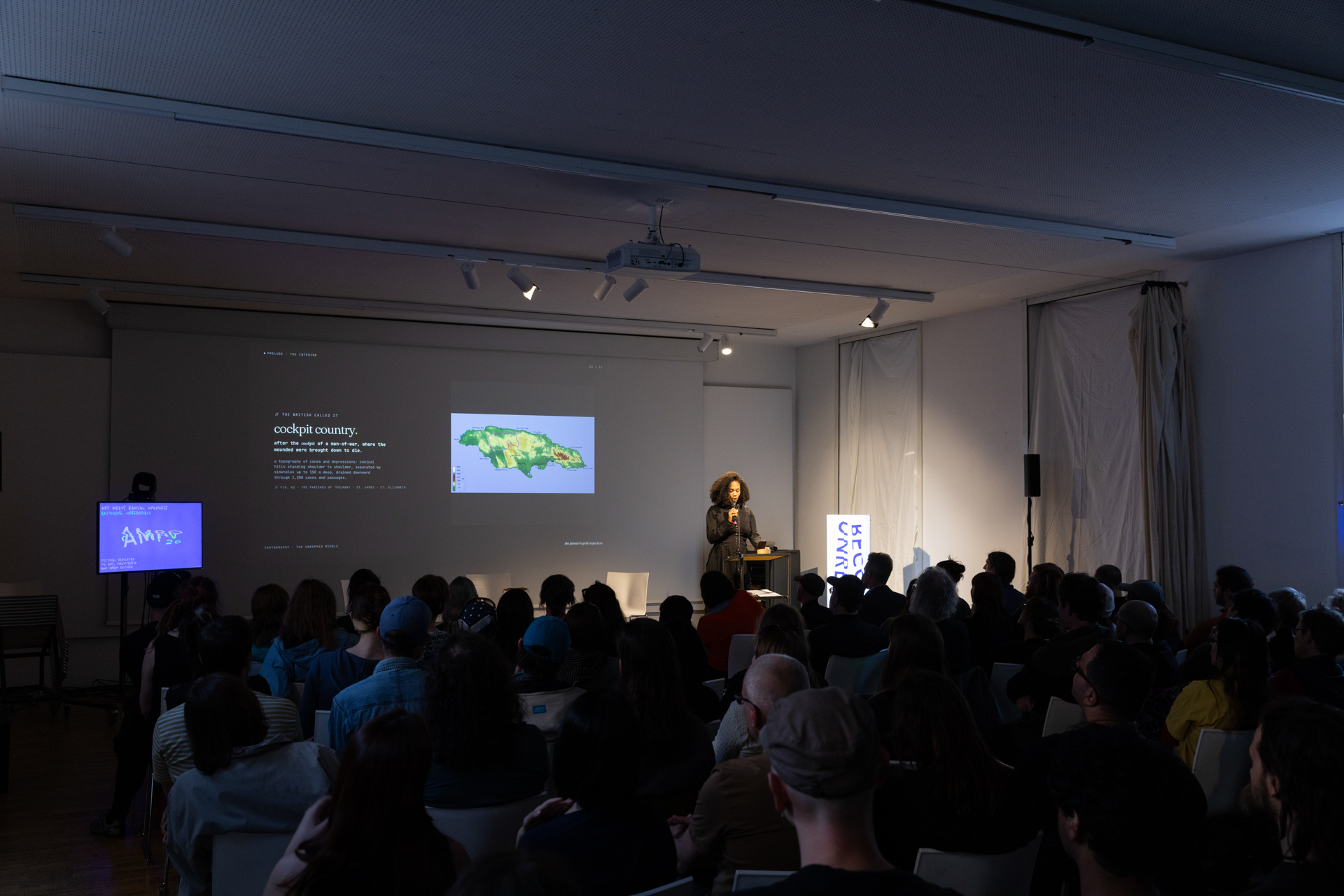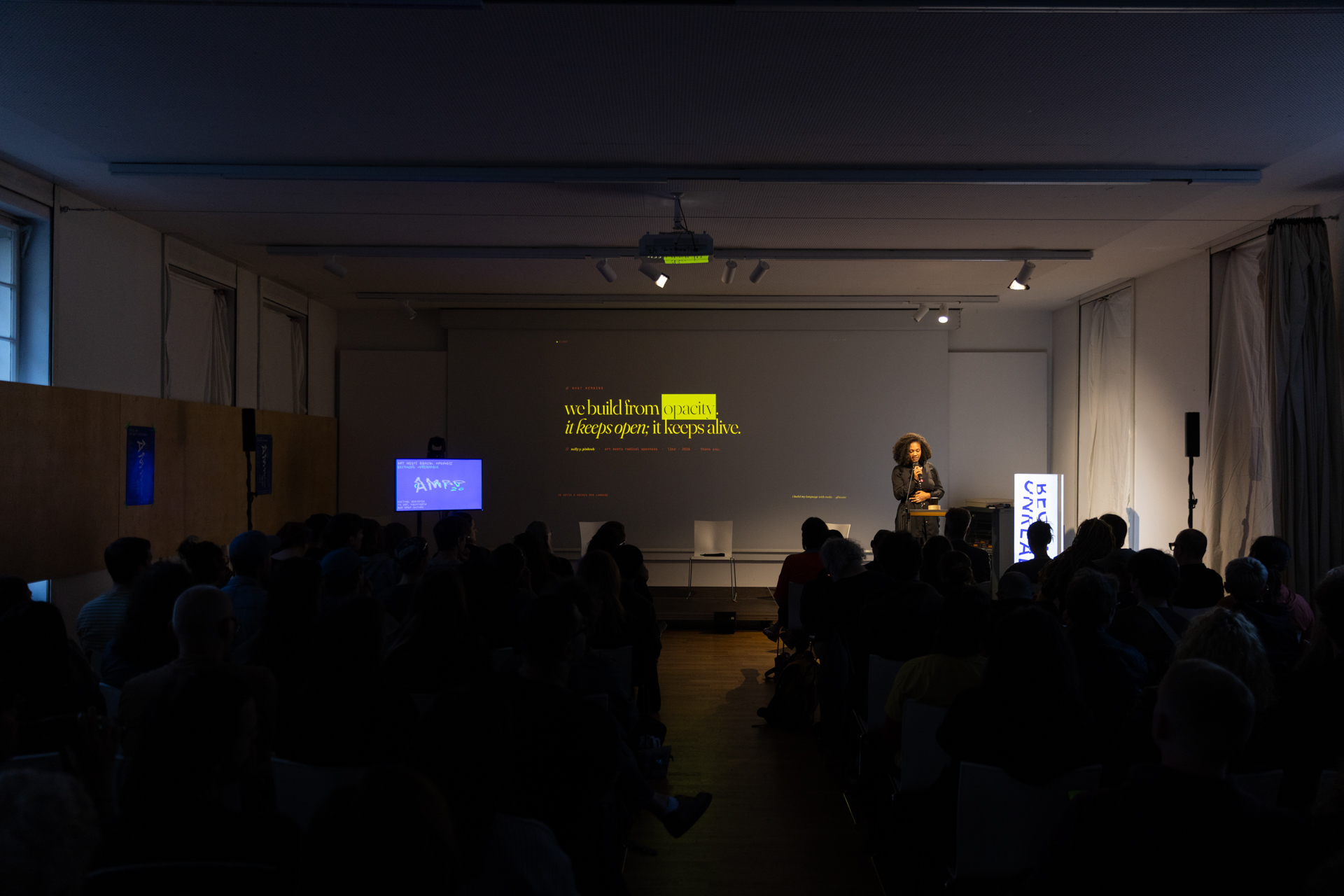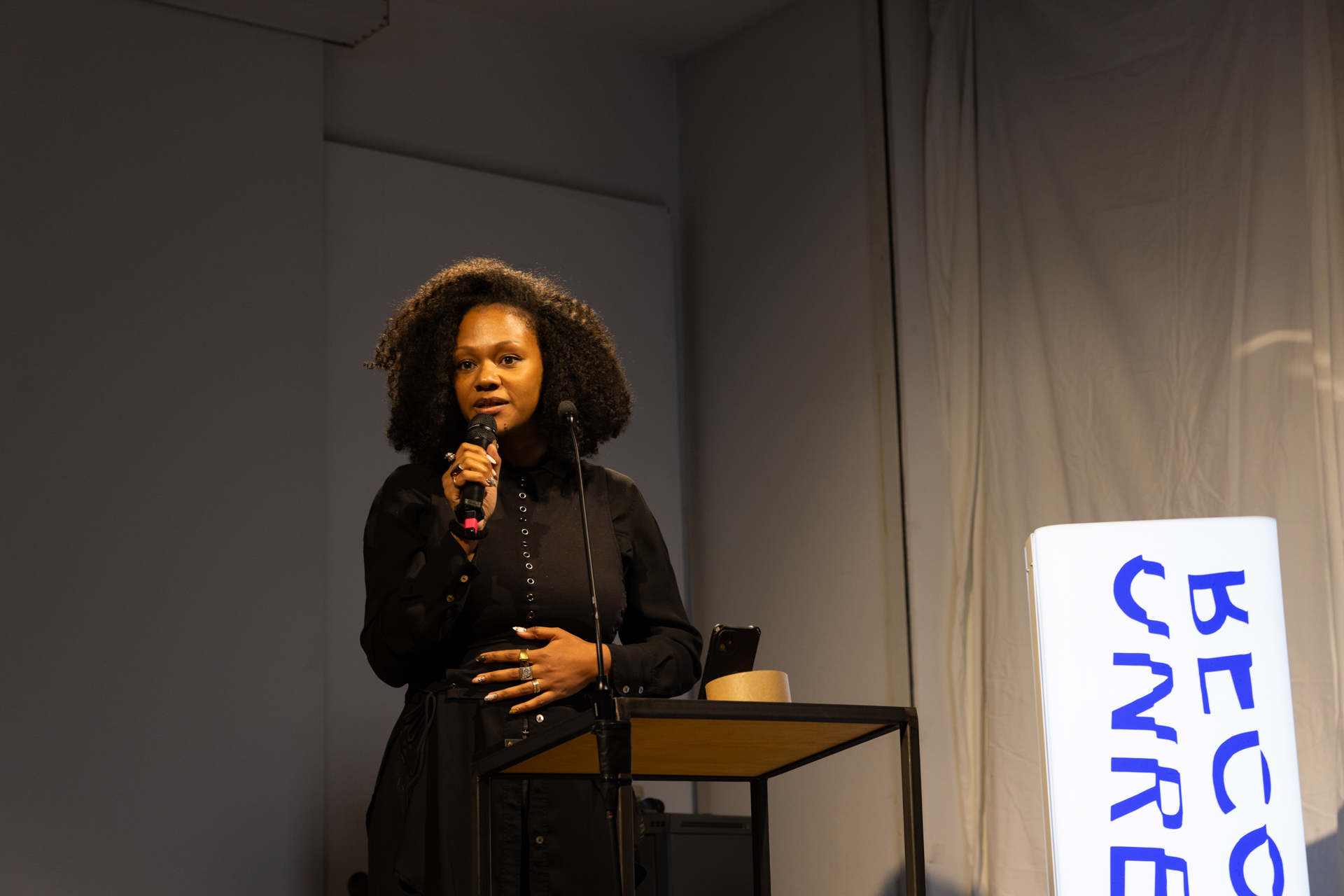

When light meets a dense surface it stops, and when a word meets a machine, it is rendered mute. From the Latin opācus (shadowed, impenetrable) to Glissant’s «right to opacity,» opacity is both a material fact and a political gesture. In this talk I follow that line of resistance across domains that habitually demand total legibility: the archivist whose collections stubbornly refuse tidy chronologies, or the algorithmic sphere that constantly tries to force the un‑computable into a clean code base. I will ask what space the festival’s theme «Becoming Unreadable» invites us to inhabit when we keep and stay with the dense, the noisy, the untranslatable.
In that unsettled terrain relations may hover in uncertainty, yet they surface; hidden labor and alternative logics come into view, and collaboration can no longer prescribe but must negotiate. The most fertile technics are precisely those that deliberately remain, at least in part, unreadable.
Moderation by: Aileen Derieg
Photos by: Jürgen Grünwald